

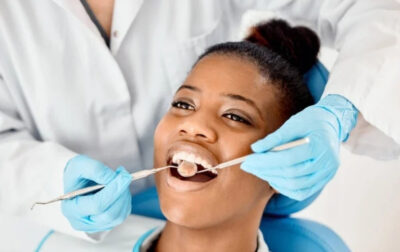
Your dentist pauses during the examination, studying your X-rays with a thoughtful expression. “This is more complex than I can manage here,” they say carefully. “I’d like to refer you to a specialist orthodontist who works with these types of cases.” For many patients, this moment triggers anxiety. Complex? What does that mean? Will I need surgery? How much will this cost? But here’s the reality that dental professionals understand well: some smiles require more than a single practitioner’s expertise. They need a conductor—someone who can orchestrate multiple dental specialists into a harmonious treatment plan that addresses not just crooked teeth, but missing teeth, impacted teeth, jaw discrepancies, or previous dental trauma. This is precisely where Park Lane Orthodontics in Reading operates at its highest level. As a specialist referral centre, the practice receives complex cases from dentists across Reading and beyond who trust Mr Ben Buffham, a Registered Specialist Orthodontist, to coordinate multidisciplinary care that transforms lives. If you’ve been told your case is “too complicated” or that you need “multiple specialists,” here’s what that journey actually looks like—and why having an expert conductor makes all the difference.
What Makes a Case ‘Complex’?
Not all orthodontic cases are created equal. Whilst many adults and teenagers present with straightforward crowding or spacing that responds well to standard aligner treatment, others arrive with challenges that require sophisticated planning and collaboration. Complex cases typically involve one or more of the following:
Missing teeth requiring implant placement: When permanent teeth are congenitally missing or have been lost to decay or trauma, straightening the remaining teeth is only part of the solution. The spaces must be either closed orthodontically or maintained at precise dimensions for implants.
Impacted canines or other teeth: Sometimes teeth fail to erupt properly, becoming trapped beneath the gum or even lodged in the bone. Ben Buffham has particular expertise in managing impacted teeth, one of the “more complex aspects” of orthodontics that fascinates him professionally. These cases often require surgical exposure followed by careful orthodontic traction to guide the tooth into position.
Severe jaw discrepancies: When the upper and lower jaws don’t match in size or position, teeth alone cannot solve the problem. Skeletal discrepancies may require orthognathic (jaw) surgery coordinated with orthodontics.
Post-trauma reconstruction: Accidents that damage teeth, bone, or jaw structures require comprehensive rehabilitation involving multiple dental disciplines.
Periodontally compromised patients: Adults with gum disease history require careful orthodontic management to avoid worsening bone loss whilst achieving alignment.
These scenarios demand more than technical skill with braces; they require diagnostic sophistication, surgical coordination, and the ability to see the entire puzzle rather than isolated pieces.
The Multidisciplinary Team Approach: Ben as Conductor
Think of complex dental rehabilitation as an orchestra. Each specialist—the implantologist, the restorative dentist, the oral surgeon, the periodontist—brings crucial expertise to their instrument. But without a conductor to coordinate timing, sequence, and overall vision, the result is cacophony rather than symphony. This is Ben Buffham’s role as a Registered Specialist Orthodontist at a referral centre.
His musical background isn’t merely a charming biographical detail; it fundamentally shapes how he approaches multidisciplinary cases. Just as a musician understands that harmony requires every note to be precisely timed and tuned, Ben knows that complex dental cases require meticulous sequencing. The implant can’t be placed until the orthodontic space is exact. The crown can’t be fitted until the tooth position is stable. The periodontal grafting must happen before certain tooth movements begin.
Ben’s collaborative approach means he:
- Communicates comprehensively with referring dentists: Detailed treatment plans, progress updates, and consultation on optimal timing for each phase
- Attends to biomechanical realities: Understanding how moving teeth affects bone, how forces must be calibrated for compromised periodontium, and how surgical outcomes integrate with orthodontic goals
- Maintains the long-term vision: Whilst each specialist focuses on their specific contribution, Ben holds the blueprint for the final result
This orchestration is precisely why other dentists across Reading trust Park Lane Orthodontics with their most challenging patient cases. They’re not simply referring to someone with braces; they’re partnering with a specialist who has the training and experience to manage complexity safely and effectively.
Real-World Scenario 1: Orthodontics Combined with Dental Implants
Consider Sarah, a 32-year-old professional who lost her upper lateral incisors years ago due to an accident. She’s lived with a partial denture, but it’s affected her confidence in client meetings. Her general dentist refers her to Ben with a clear objective: create space for implants in the ideal positions, align her remaining teeth, and coordinate with an implantologist for the final restoration.
Ben’s treatment plan unfolds in carefully sequenced stages:
- Initial orthodontic phase: Using Invisalign (Park Lane holds Diamond Apex status), Ben aligns Sarah’s remaining teeth and creates precise space for the implants. This isn’t guesswork; digital planning ensures the space dimensions match exactly what the implantologist needs for optimal implant angulation.
- Implant placement: Once Ben confirms ideal spacing and tooth position, he coordinates with the implantologist. The timing is crucial—implants require several months to integrate with bone before final crowns.
- Final orthodontic refinement: After implant integration, Ben makes final adjustments to ensure perfect alignment and bite.
- Restorative phase: The general dentist or prosthodontist places the final implant crowns, knowing the surrounding teeth are in ideal positions to support long-term success.
Without specialist-level coordination, Sarah might have faced implants placed in suboptimal positions, requiring compromised crown shapes, or orthodontic movements that damaged implant sites. Ben’s expertise ensures each phase builds on the previous one towards a predictable, functional, and aesthetic outcome.
Real-World Scenario 2: Managing Impacted Canines
Tom’s dentist noticed during a routine X-ray that his teenage son’s upper canine wasn’t erupting. Instead of emerging through the gum in the normal position, it was impacted—stuck high in the bone, aimed in the wrong direction. The dentist immediately referred to Ben, knowing that impacted canines require specialist management and often surgical intervention.
Ben’s approach demonstrates the depth of his expertise:
- Diagnostic assessment: Using CBCT imaging (3D scans), Ben determines the exact position of the impacted tooth, its relationship to adjacent tooth roots, and the feasibility of bringing it into the arch.
- Surgical coordination: Ben works with an oral surgeon to plan the exposure of the impacted canine. The surgeon will create access and bond a small bracket to the buried tooth.
- Orthodontic traction: Over 12-18 months, Ben applies gentle, precise forces to guide the impacted canine along a predetermined path into its correct position. This requires biomechanical understanding that general dentists don’t receive in their training—applying force in the wrong direction could damage the tooth or neighbouring structures.
- Final alignment: Once the canine emerges, Ben completes comprehensive orthodontic treatment to ensure the rescued tooth functions properly and looks natural.
This type of case exemplifies why specialist training matters. The biological and mechanical complexities of managing impacted teeth require years of additional education beyond general dentistry. Ben’s fascination with these “more complex aspects” of orthodontics means he’s continuously refining his skills in precisely the cases others find daunting.
Real-World Scenario 3: Orthodontics and Orthognathic Surgery
For patients with severe skeletal discrepancies—where the jaws don’t match in size or position—teeth alone cannot solve the problem. These cases require orthognathic (jaw) surgery coordinated with orthodontics. Ben works closely with maxillofacial surgeons to plan combined surgical-orthodontic treatment.
The process typically involves:
- Pre-surgical orthodontics: Ben aligns the teeth within each jaw, often making the appearance temporarily worse before surgery corrects the underlying skeletal problem
- Surgical planning: Detailed coordination with the surgeon to determine how the jaws will be repositioned
- Post-surgical orthodontics: Final detailing of tooth positions once the jaws are in their corrected relationship
These cases require patience and strategic vision—qualities Ben embodies both professionally and personally. His love of cycling up large hills is an apt metaphor: the summit isn’t visible when you begin the climb, and the middle section often feels like you’re making little progress. But with steady effort, precise pacing, and resilience through the difficult stretches, you reach the destination. Complex multidisciplinary cases follow the same pattern—long treatment timelines, intermediate stages that don’t yet show the final result, but ultimately transformative outcomes for patients willing to trust the process.
Why a Specialist Referral Centre Matters for Complex Cases
When dentists across Reading and beyond send their complex cases to Park Lane Orthodontics, they’re making a professional judgment based on several factors:
Specialist training: Ben’s placement on the GDC Specialist Register represents years of additional postgraduate education specifically in orthodontics, including biomechanics, growth and development, and complex case management.
Multidisciplinary experience: As a referral centre, Ben routinely manages cases requiring surgical coordination, implant planning, and collaboration with restorative colleagues. This isn’t occasional work; it’s daily practice.
Professional network: Ben’s associate position at Exeter Advanced Dentistry and his long-standing relationships with dental specialists across the region mean he has trusted colleagues for every aspect of complex care.
Long-term outcomes focus: Park Lane’s philosophy of long-term facial aesthetics rather than quick fixes aligns perfectly with complex cases, which require patience and comprehensive planning.
If You’ve Been Told Your Case Is Too Complex
Perhaps you’ve heard discouraging words from a previous practitioner: “Your case is too difficult.” “We can’t help you here.” “You’re not a good candidate.” Before accepting these conclusions, consider seeking a second opinion at a specialist referral centre.
Ben’s expertise in managing what others consider impossible has given hope to hundreds of patients who thought comprehensive smile transformation was beyond reach. His combination of technical skill, collaborative relationships with other specialists, and genuine passion for complex cases means he approaches challenging situations with enthusiasm rather than trepidation.If you’ve been told your case is too complex, contact Park Lane Orthodontics—the specialist referral centre where Reading dentists send their most challenging cases. Call 0118 941 1628 to discuss your unique needs with Registered Specialist Orthodontist Mr Ben Buffham, or visit www.parklaneorthodontics.co.uk to begin your journey towards comprehensive smile transformation.