

The day your braces come off is one of the best moments in orthodontic treatment. Years of appointments, adjustments, and careful cleaning suddenly give way to the result you came for – a straight, confident smile. It’s tempting to think the hard work is done.
Here’s the thing, though: what you do after treatment ends is just as important as the treatment itself. Teeth have a natural tendency to move back towards where they started, and without proper retention, even a textbook orthodontic result can drift over time. This post covers everything Park Lane Orthodontics patients need to know about retainers – what they are, how they work, and why our approach to post-treatment monitoring is different from most practices.
Why teeth move after orthodontic treatment
Understanding why retention matters starts with understanding how orthodontic treatment actually works.
Throughout your treatment, braces or aligners apply controlled, consistent pressure to gradually shift teeth into their corrected positions. What most people don’t realise is that the bone and tissue surrounding each tooth is also remodelling throughout this process – breaking down on one side and rebuilding on the other to accommodate the new position.
When treatment ends, that remodelling isn’t finished. The teeth are in their new positions, but the surrounding structures haven’t fully stabilised yet. The fibres connecting teeth to the jawbone retain a kind of memory of where the teeth used to sit, and without something holding the teeth in place during this settling period, they’ll begin to drift back.
This isn’t a sign that anything went wrong. It’s simply biology. And it’s why retention isn’t an optional afterthought – it’s a fundamental part of the treatment itself.
The two types of retainer
There are two main approaches to retention, and in many cases both are used together.
Bonded retainers
A bonded retainer is a thin wire fixed to the back surfaces of the teeth – usually the lower front teeth, though upper bonded retainers are used in some cases too. Because it’s fixed in place, you don’t need to remember to wear it. It works continuously, holding the teeth in position without any effort on your part.
The trade-off is that bonded retainers require careful cleaning. The wire sits close to the gum line and food can accumulate around it, so consistent and thorough brushing – along with flossing or the use of interdental brushes around the wire – is essential to keep the gums healthy.
Removable retainers
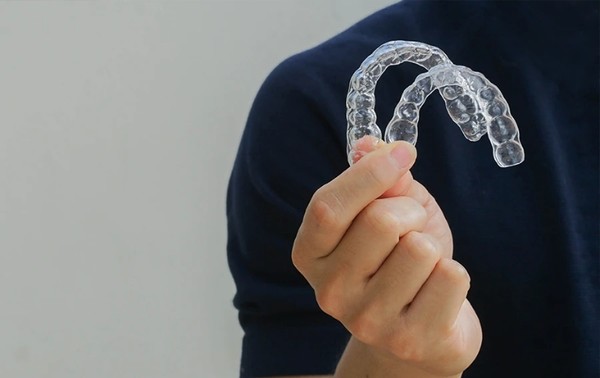
Removable retainers are custom-made clear trays, similar in appearance to Invisalign aligners, worn over the teeth to maintain their position. Unlike aligners, they’re not applying pressure to move anything – they’re simply holding what’s already been achieved.
Wearing patterns vary depending on individual cases, but patients are typically advised to wear removable retainers every night long-term. The most common mistake is assuming that once teeth feel stable, the retainer can be retired. This assumption leads to more cases of drift than almost anything else.
What Park Lane does differently after treatment ends
Most orthodontic practices hand over a retainer and schedule one follow-up appointment. At Park Lane Orthodontics, our approach extends considerably further than that.
After your braces or aligners come off – what we call debond – we continue monitoring patients for a full year. During this period, if any issues arise with your bonded or removable retainer, we’ll correct them at no additional charge. That means if a bonded wire comes loose, shifts, or needs adjustment, or if a removable retainer needs remaking because it no longer fits correctly, it’s covered.
This matters for one straightforward reason: the post-debond period is when most retention problems emerge. A wire that partially detaches, or a removable retainer that gradually stops fitting as well as it should, often goes unnoticed until teeth have already begun to move. Our monitoring process is designed to catch and address these things before they become a problem.
What to do if a retainer breaks or feels different
If your bonded retainer feels loose at any point, or if you notice a section of wire that has detached from a tooth, contact the practice as soon as possible. Don’t wait for your next scheduled appointment. The longer a partially detached retainer is left in place, the greater the risk of tooth movement in that area.
The same applies to removable retainers. If yours suddenly feels tighter than usual after a period of not wearing it consistently, that tightness is the retainer telling you that some movement has already occurred. Bring it up with the team rather than forcing it to fit.
How long do you need to wear a retainer?
The straightforward answer is: indefinitely, for most people.
This is one of those areas where orthodontics has evolved over the years. The old advice – wear your retainer for six months, then you’re done – has largely been replaced by a much clearer understanding of long-term tooth movement. Teeth don’t simply stop moving at a certain point in adulthood. Natural changes to the jaw, the gradual shifting that comes with ageing, and the simple forces of everyday biting and chewing all mean that some degree of movement continues throughout life.
For bonded retainers, “indefinitely” means exactly that – the wire stays in place until there’s a specific clinical reason to remove it. For removable retainers, long-term nightly wear is the approach most specialist orthodontists now recommend.
What happens if I don’t wear my retainer
Patients who stop wearing removable retainers often notice gradual changes over months or years rather than sudden overnight shifts. Crowding tends to return before gaps do; lower front teeth are typically the first area to show signs of drift.
In some cases, mild drift can be managed with a new retainer. In others, a short period of retreatment may be needed. Neither outcome is a disaster, but both are avoidable with consistent retention.
If you had orthodontic treatment at Park Lane and you’re noticing changes to your smile, get in touch rather than leaving it. The earlier we see it, the simpler the conversation tends to be.
Looking after your retainer
A few practical points worth covering:
Bonded retainers should be checked at every routine appointment with your general dentist. Let them know it’s there so they can assess the bond and look for any build-up of tartar around the wire.
Removable retainers should be cleaned daily with a soft brush and cool water. Avoid hot water, which can distort the shape of the tray. Retainer cleaning tablets are helpful for a deeper clean once or twice a week. Keep the retainer in its case when not in use – the most common way retainers are lost or damaged is being left on tables, wrapped in napkins, or put within reach of a pet.
Book a post-treatment review
Whether you’re a current Park Lane Orthodontics patient approaching the end of your treatment, or someone who had orthodontic work done elsewhere and has concerns about your retention, we’re happy to help.
Our practice is based in Tilehurst, Reading, with on-site parking and easy access from across Berkshire. We see patients from Caversham, Theale, Pangbourne and the surrounding areas, and our team is used to fielding exactly these kinds of questions – so please don’t hesitate to get in touch.
To speak to the team or book an appointment, call us on 0118 941 1628 or email [email protected].
FAQ
Are retainers included in the cost of orthodontic treatment at Park Lane?
Retainers are typically included in your treatment package. Your treatment coordinator will confirm exactly what is included at your consultation appointment.
How soon after braces come off do I need to start wearing a retainer?
Retention begins the same day as debond. There is no gap between finishing active treatment and starting your retainer – the two transitions happen together.
Can I get a replacement retainer if mine breaks or is lost?
Yes. If you are within your one-year post-debond monitoring period, replacements needed due to retainer failure are included at no additional charge. Beyond that period, replacements can be made by the practice for a fee.
My teeth have shifted slightly since finishing treatment – is it too late to do anything?
It’s rarely too late, and acting sooner is always better than waiting. Depending on the degree of shift, the solution may be as simple as a new retainer to hold the current position. Get in touch with the team and we can advise you properly.