

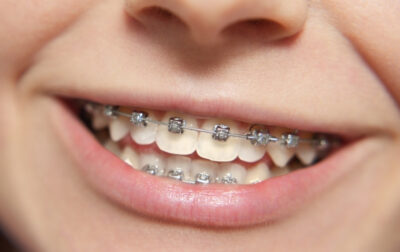
A lot of what people believe about orthodontics is years out of date. The biggest misunderstanding is that it’s only about straightening the front teeth. At Park Lane Orthodontics in Tilehurst, Reading, treatment is planned through a long-term facial aesthetics lens, meaning how your teeth sit affects your whole face. As of June 2026, that view shapes every case Mr Ben Buffham takes on.
Let’s clear up six myths that still put people off.
Myth 1: braces are just for teenagers
This one’s stubborn, and it’s wrong. Plenty of adults have orthodontic treatment, and the numbers have grown sharply as clear aligners made it discreet.
Some adults are fixing a concern they’ve lived with for decades. Others are correcting teeth that drifted after childhood braces. Either way, age isn’t the barrier people imagine. Healthy teeth can be moved at almost any age, and many of Park Lane’s patients are well past their teens.
Myth 2: it’s only about a straighter smile
Here’s the heart of it. Tooth position affects far more than the look of your front teeth.
It influences how your lips are supported, the balance of your profile, and the way your face ages. Mr Buffham plans treatment with that long-term view, considering the whole face rather than just the smile you see in a mirror today. It’s a more thorough way to approach orthodontics, and it’s one of the things that distinguishes a Registered Specialist from a general dentist offering braces as a side service.
Myth 3: any dentist offering braces is a specialist
Not so. The word “specialist” is legally protected in UK dentistry.
Any qualified dentist may provide orthodontic treatment, but only a clinician on the General Dental Council’s specialist list can call themselves a Registered Specialist in Orthodontics. Mr Buffham holds that registration under GDC number 69390, alongside an MOrth from the Royal College of Surgeons Edinburgh. It’s a quick way to know the training behind your treatment.
Myth 4: clear aligners only work on minor cases
Aligners have come a long way. Modern Invisalign treatment handles far more than mild crowding.
The outcome depends heavily on the planning, which is where provider experience matters. Mr Buffham is a Diamond Apex Invisalign provider, placing him in the top 1% in Europe by case volume and outcome quality. That depth of experience means aligners can be used for more involved cases than many people assume, though a consultation will confirm what’s realistic for you.
Myth 5: straightening teeth is purely cosmetic
A straighter smile is the visible benefit, but it isn’t the only one. Teeth that meet correctly are easier to clean and tend to wear more evenly.
A poor bite can place uneven strain on certain teeth over years. Correcting it isn’t vanity; it’s part of keeping the whole system working well over a lifetime. The facial aesthetics view takes that even further, looking at how alignment supports the structure of the face itself.
Myth 6: treatment takes forever and ruins your appearance
Two fears rolled into one, and both are softer than they used to be.
Treatment time depends on the case, but limited corrections can be quicker than people expect, while clear aligners make the whole thing nearly invisible day to day. Here’s a quick reality check:
| Common belief | The reality |
|---|---|
| Only kids wear braces | Many patients are adults |
| It’s just cosmetic | Bite health and facial balance matter too |
| Aligners are obvious | Clear aligners are barely noticeable |
| Any dentist is a specialist | Only GDC-registered clinicians qualify |
What it costs to find out
Orthodontic fees in the UK range from around £2,000 for a straightforward course to £6,000 or more for complex, specialist-led treatment, with the exact figure confirmed after a consultation rather than quoted blind. The practice is led by Mr Ben Buffham and Dr Paula Buffham, a husband-and-wife team who have focused on orthodontics since 2005. For more on how they approach treatment, browse the Park Lane Orthodontics blog.
One more myth: leave it alone and it stays the same
There’s a quiet seventh belief worth retiring, and it catches a lot of people out. The idea is that if crooked or crowded teeth aren’t bothering you now, they’ll simply stay as they are. Leave well alone, the thinking goes, and nothing changes.
Teeth don’t work like that. They drift throughout life, slowly and steadily, whether they were straightened in your teens or never touched at all. It’s why so many adults notice their lower front teeth crowding up in their thirties and forties, long after they thought things had settled. The mouth is a living system under constant gentle pressure, and that pressure keeps nudging teeth out of line over the years.
A poor bite that’s left alone can quietly make things worse, too. Teeth that meet badly wear unevenly, and that uneven wear tends to compound rather than fix itself. What feels like a minor niggle at forty can become a more involved problem at sixty, by which point the easy window has often passed.
So doing nothing isn’t really a neutral choice. It’s a decision to let the slow drift continue, and sometimes to let a small issue grow into a larger one. That doesn’t mean every set of slightly crooked teeth needs treating; plenty don’t. But it does mean the honest question isn’t “are they bad enough yet?” It’s “are they likely to get worse, and would acting now be simpler than acting later?”
That’s exactly the sort of thing a Registered Specialist can tell you. Mr Ben Buffham can look at how your teeth are sitting today and give you a realistic view of where they’re heading, so you can choose with your eyes open rather than assume the situation is frozen. Whether the answer is treatment or simply keeping an eye on things, knowing the direction of travel beats hoping it stays still.
FAQ
Am I too old for orthodontic treatment?
Almost certainly not. Healthy teeth can be moved at most ages, and adults make up a large share of orthodontic patients now. Clear aligners have made adult treatment far more discreet than fixed metal braces ever were. A consultation with Mr Ben Buffham at Park Lane in Reading will confirm whether your teeth are suitable and explain the realistic options.
Does tooth position really affect my face?
Yes. Beyond the smile itself, tooth position influences lip support, the balance of your profile, and how your face ages over time. Park Lane plans treatment through a long-term facial aesthetics lens for exactly this reason, considering the whole face rather than the front teeth alone. It’s a more involved approach than treating alignment in isolation.
Are clear aligners as good as fixed braces?
For many cases, yes, particularly when planned by an experienced provider. Mr Buffham is a Diamond Apex Invisalign provider, in the top 1% in Europe, which means aligners can be used confidently for more involved cases than people expect. Some complex cases still suit fixed appliances better. A consultation will tell you which fits your teeth.
Is straightening my teeth just about looks?
No. A straighter, correctly meeting bite is easier to clean and tends to wear more evenly over the years, which protects your teeth long term. The cosmetic improvement is real, but it sits alongside genuine functional and facial benefits. That’s why a specialist plans the bite, not just the appearance of the front teeth.
How long does orthodontic treatment take?
It depends entirely on the case. Limited corrections targeting a few teeth can be relatively quick, while complex cases take longer because they involve more careful staged movement. Clear aligners keep the whole process discreet throughout. Mr Buffham will give you a realistic timescale for your specific teeth at your consultation.
What to do next
If any of these myths have been holding you back, the simplest step is a proper assessment. Book a consultation at Park Lane Orthodontics in Tilehurst, Reading, where Mr Ben Buffham will examine your teeth, explain what treatment could achieve for your whole smile and face, and set out a clear plan.
Call 01189411628, or learn more about the practice on the Park Lane Orthodontics homepage.